Chris Ernst

Hey! I am a User Experience Designer looking for the Next Big Thing in my life. Do you have a Next Big Thing for me? Excellent! You're in the right place. I'm a little bit technical, I'm a little bit creative, I'm a little bit country, and I'm a little bit rock n' roll. I love pushing my existing skills to the limits and being forced to get good at new ones too. I'm looking for an opportunity and team that can teach me just as much as I teach them.

Who Am I?

Hmm, that's a great question, actually. I should figure that out. //todo: figure self out;

Here's the progress so far:

  • Education
    • BS Computational Media
    • MS Music Technology
    • MS Human-Computer Interaction
  • Jobs
    • Digital Handyman - Georgia Tech
    • NodeJS Developer - BitPay
    • UX Developer - Coca-Cola
    • UX Designer - Elavon
    • UX Designer - NCR

What Can I Do?

Design

I can start a design from scratch, based on a business or user need, or work with existing ideas and designs to improve and iterate on them. I have experience in the entire design process from design, through prototype and build, to evaluation. I've used Figma extensively, but can also pick up a new tool easily. I'm also no stranger to good ol' pen and paper and can find a way to use any medium to express a design idea.

Prototype

I can make clickable prototypes in Figma, but I can also whip something up in HTML/CSS/JS. I can make looks-like prototypes and works-like prototypes and know when to do which. I can prototype small (but important!) microinteractions to complete applications and everything in between.

Evaluate

I can do moderated and unmoderated user testing with all fidelities of prototypes. I can use qualitative and quantitative methods to evaluate and iterate on many kinds of designs, from interfaces to physical devices. I can extract quantitative data from qualitative interviews and surveys, and conducted surveys and questionnaires. From guerrilla-type research a la "Don't Make Me Think," to more formal studies using tools like UserTesting.com, I can use a variety of methods and tools to evaluate different facets of a product.

Contact Me

Like what you see? Want to know more?

Design

The world is already a scary, confusing place so I always appreciate when design makes things a little better. I love when something I thought was going to be difficult or confusing ends up being easy-peasy, and I do everything I can to pay it forward so someone else can have a glimmer of hope in these unprecedented times mired by uncertainty and confusion. Uh, well anyway... I have been using Figma almost exclusively since 2020 (and it's been wild to see it grow!) and have experience with other tools and techniques too.

Tools

  • Figma
  • Axure
  • Sketch
  • Literal sketch (pen and paper)
  • Adobe Suite
  • Balsamiq

NCR (2019-2025)

  • Design system
  • Figma, Figjam, Figma Make
  • Developer relations
  • Agile workflow

At NCR, I worked as part of a team and individually. As a team we made the software for a white label self-service food ordering kiosk. I designed and implemented a flow chart and naming system to give names to all pages to identify where they go in the flow or sub-flow. Having this standard lets developers and designers reference specific and nuanced parts of the app using the same unambiguous language.
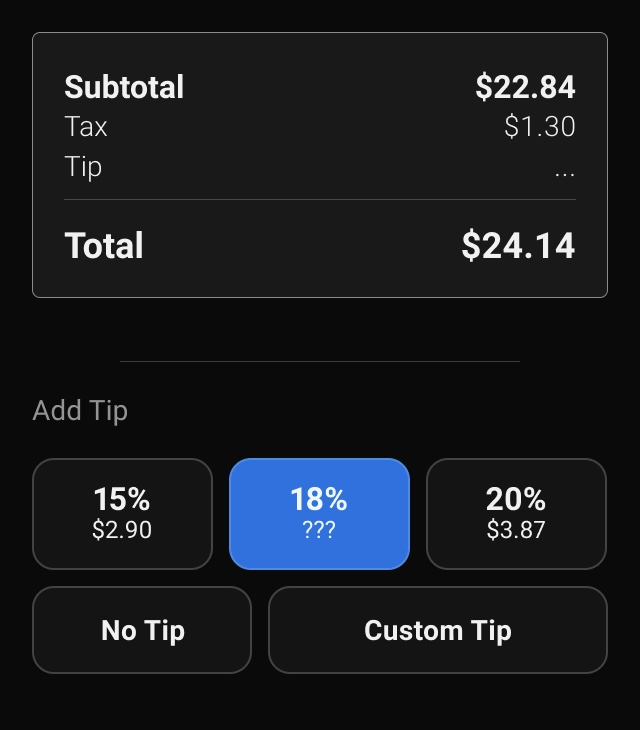
During the pandemic I worked solo to design a mobile web app for restaurant customers to pay their bill on their own device to minimize contact between restaurant staff and diners. I created a mini design system and prototyped interactive flows, all in Figma.

Later I continued working alone on larger projects to completely redesign the software updating system for NCR hardware, and completely relaunch the configuration tool for NCR hardware from a Windows app to a web-based tool. These projects were also very technical so I collaborated heavily with the experts and business partners to discover what worked well about the old product and what needs to be improved. We had long conversations about user goals, diagrammed flows, and dreamed about how to improve this convoluted process. The NCR design system was spinning up at this point and I was one of the first designers to really put it to the test, give feedback, and contribute components.

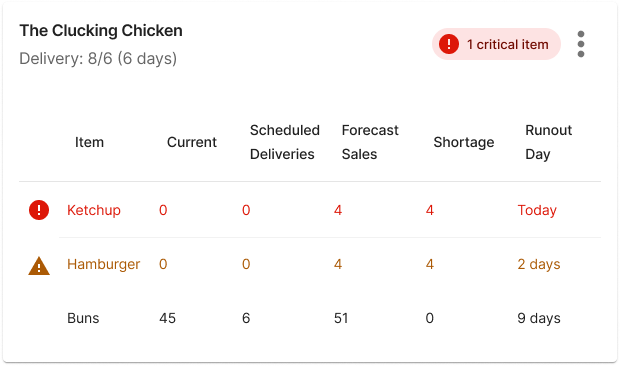
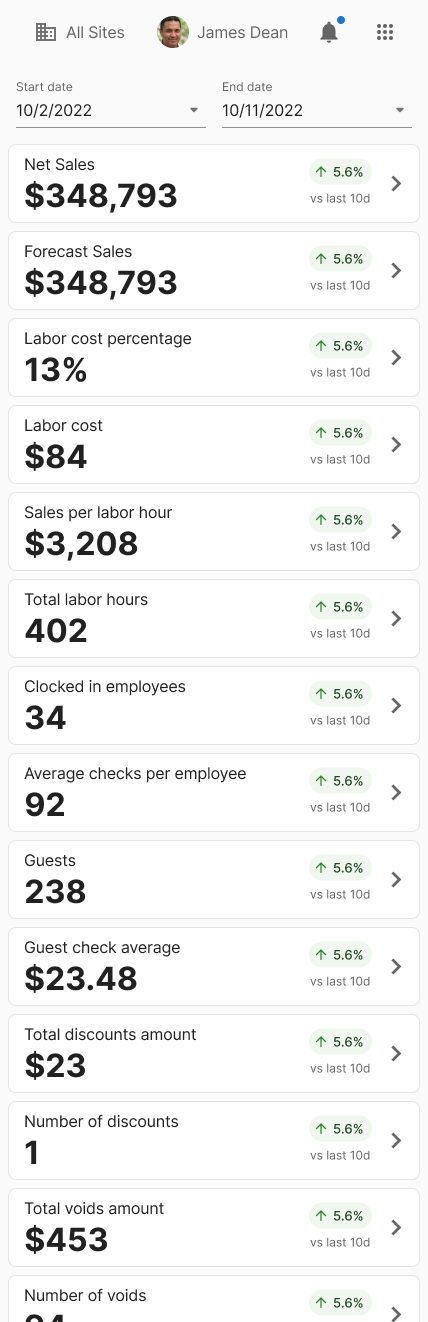
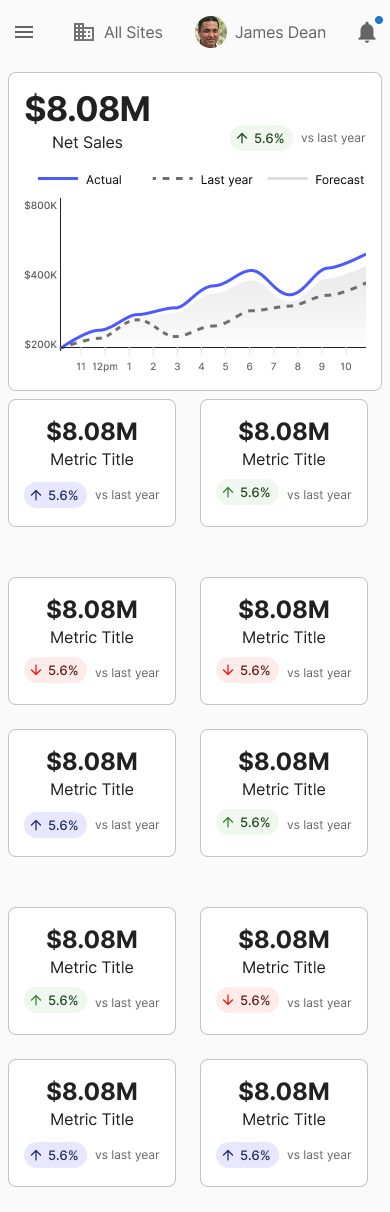
The final project I worked on was a huge restaurant management system for owners/operators to run everything about their restaurant business from scheduling workers, to looking at sales data, to managing inventory of food ingredients. We worked with a third party development company to get things started and then transitioned to our in-house developers. The design system was fully mature at this point and we used it exclusively. I also had the opportunity to mentor a junior designer! Since this was a huge project, we used an agile workflow to keep in sync with product, design, and the third party developers. I also ran meetings with the developers only (a safe space away from the project managers) to ask any immediate questions, see progress, and just make sure everything was going smoothly.

Throughout these projects we baked accessibility in. Aside from being the right thing to do, it's a major selling point. Our food ordering kiosk hardware has a D-pad and a headphone jack, so we designed our non-touchscreen interactions around those. For screen-based interactions we consulted our accessibility expert and WCAG standards to ensure access for all.

Cost of Goods Sold

This feature started with requirements from the business people for a report about the cost of everything sold. This should help answer the question: "am I making money?" by telling you how much of a menu item's cost goes towards its ingredients, and walking you through the calculation so you can see where any problems are.
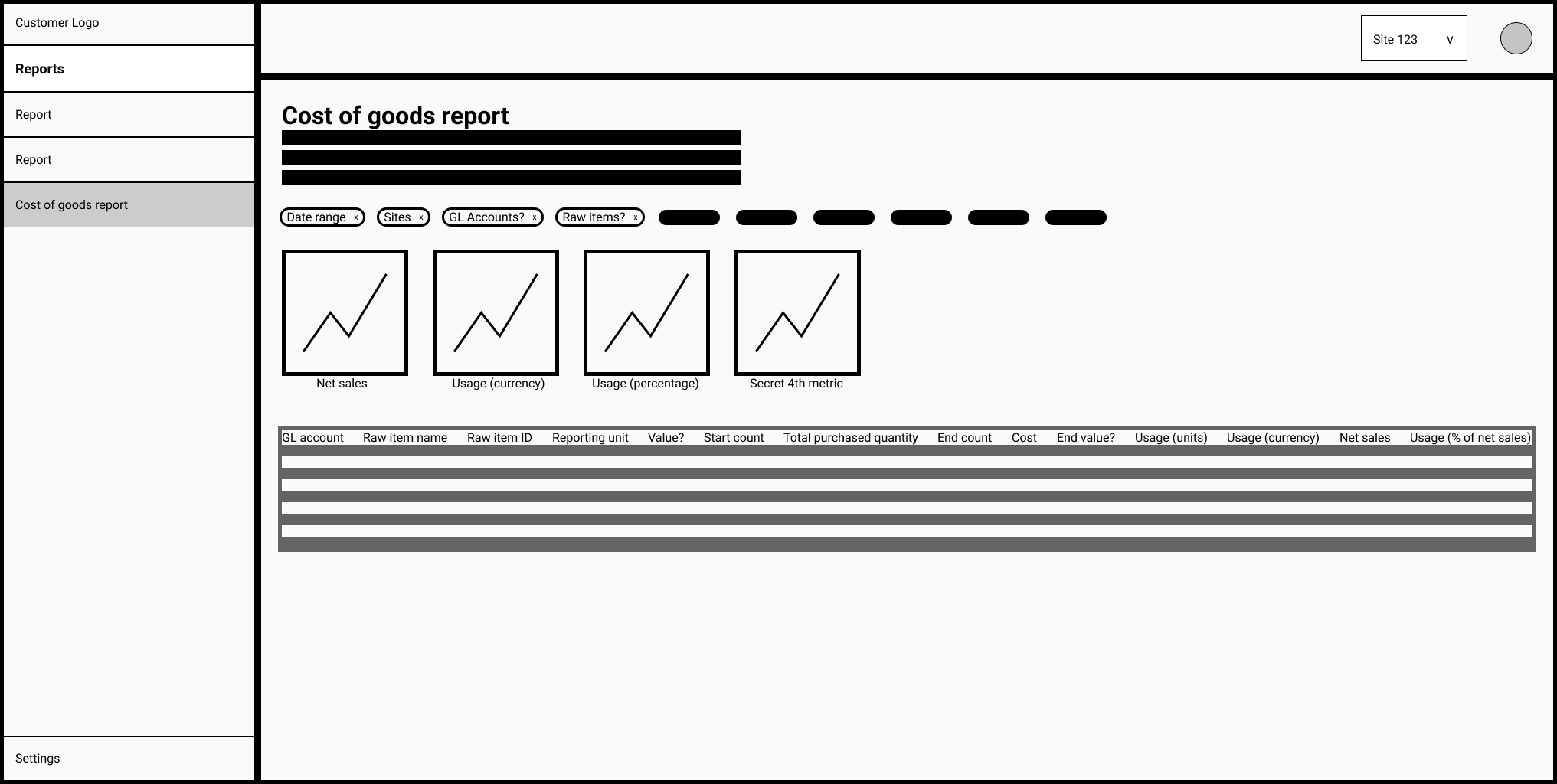
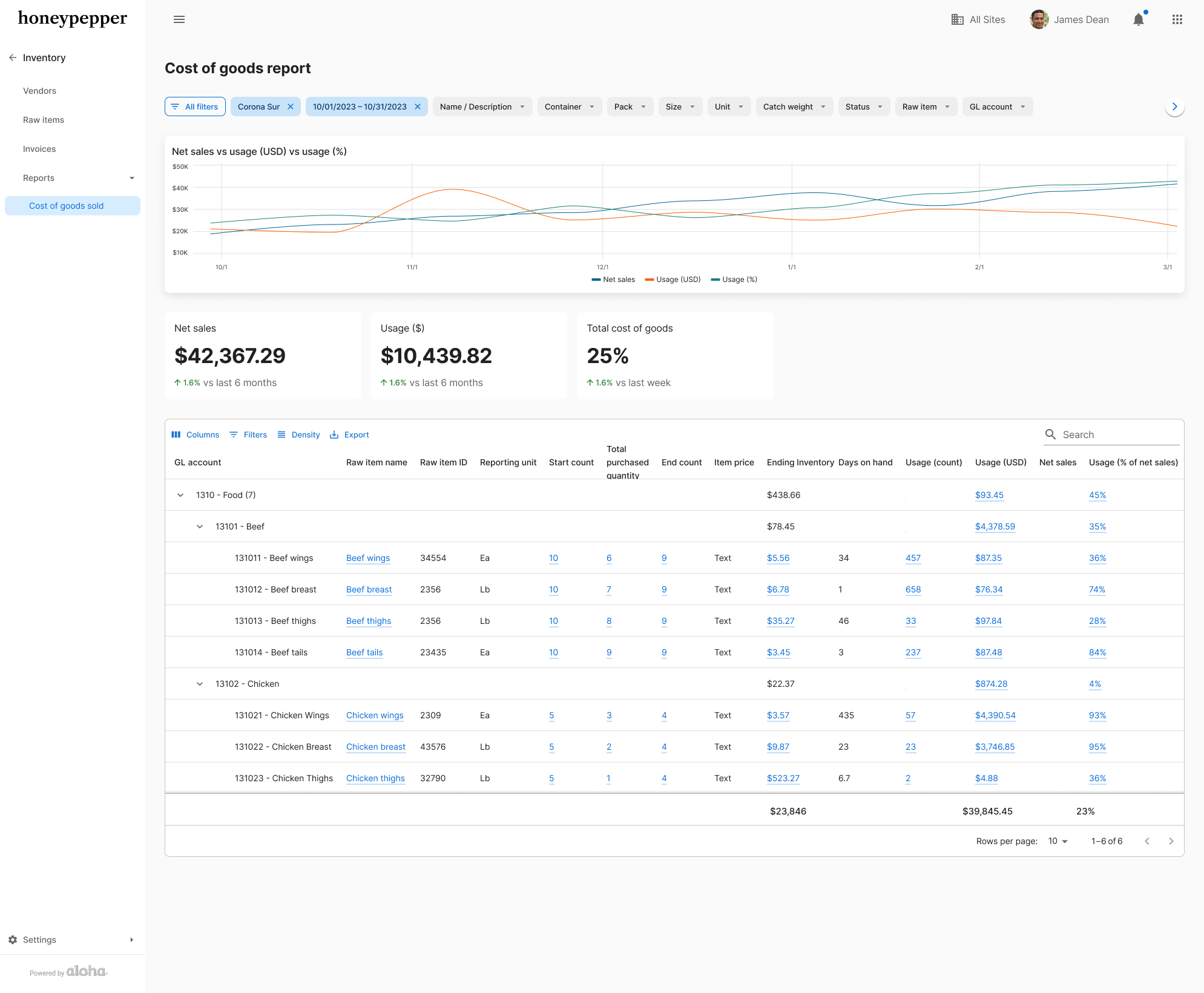
Low fidelity and high fidelity versions

Dashboard

And sometimes you have to come up with a lot of versions of something until you're happy and all the stakeholders are happy...
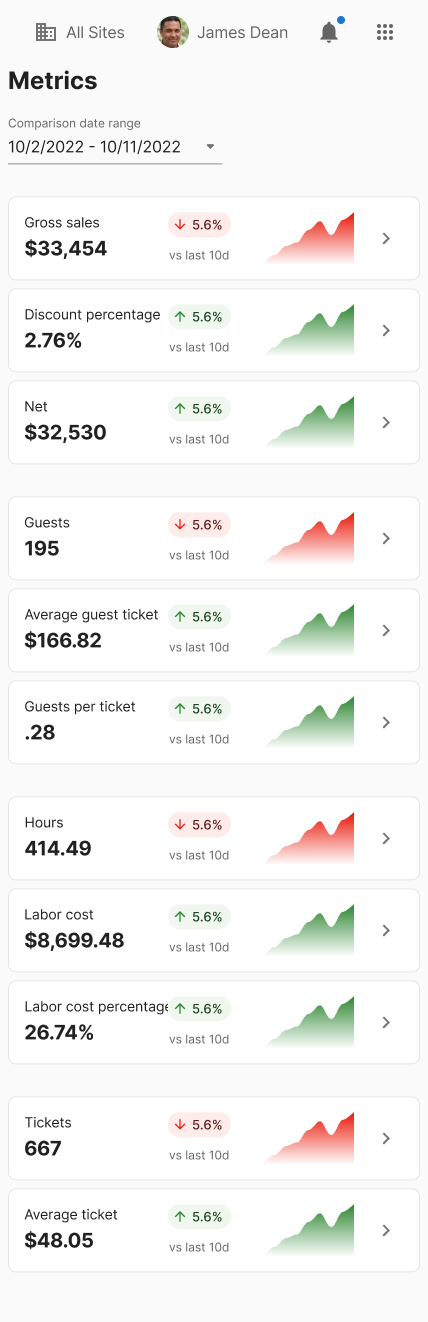
Iterate, iterate, iterate...

Elavon (2016-2018)

  • Baby's first job
  • Corporate life

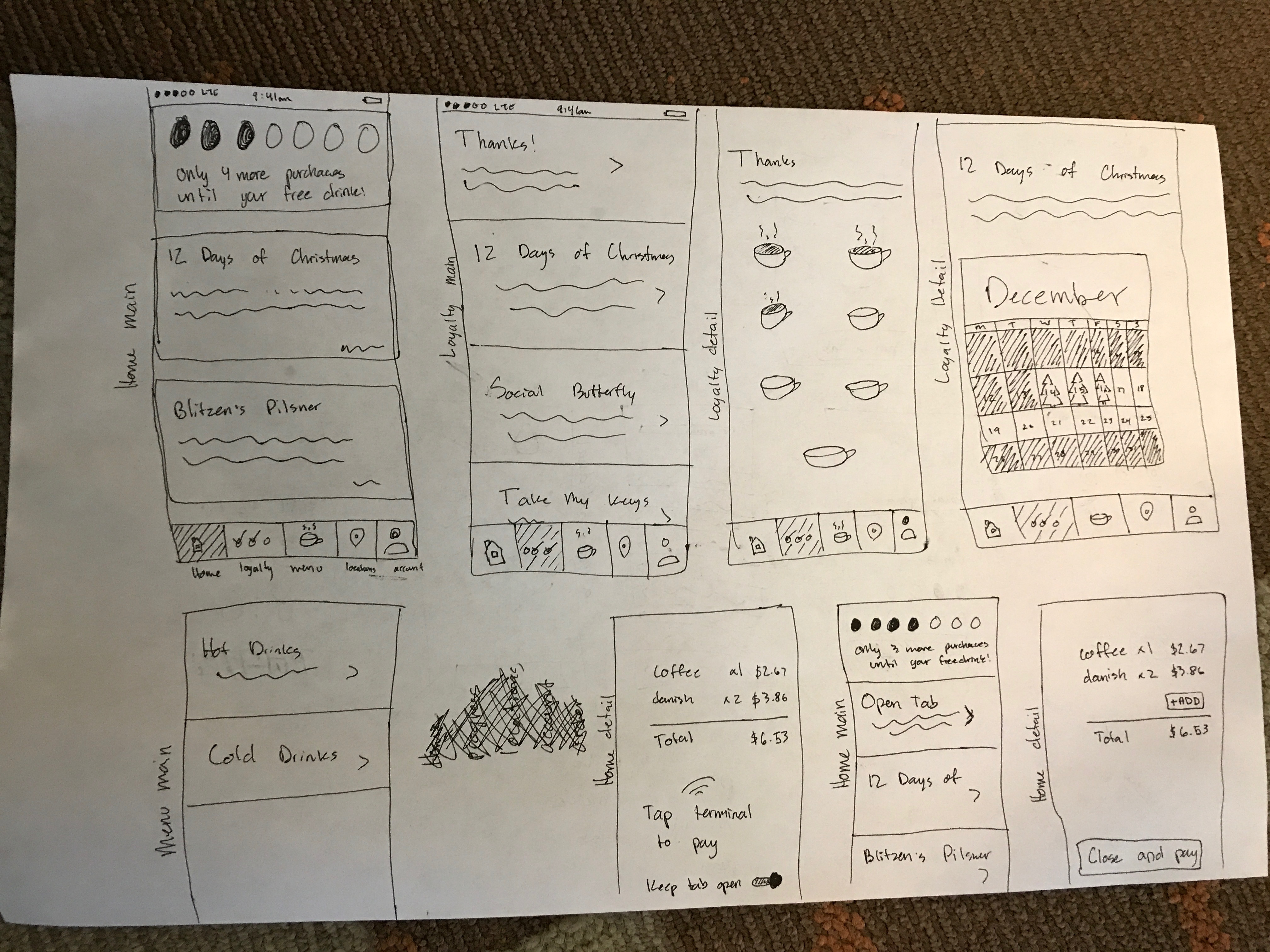
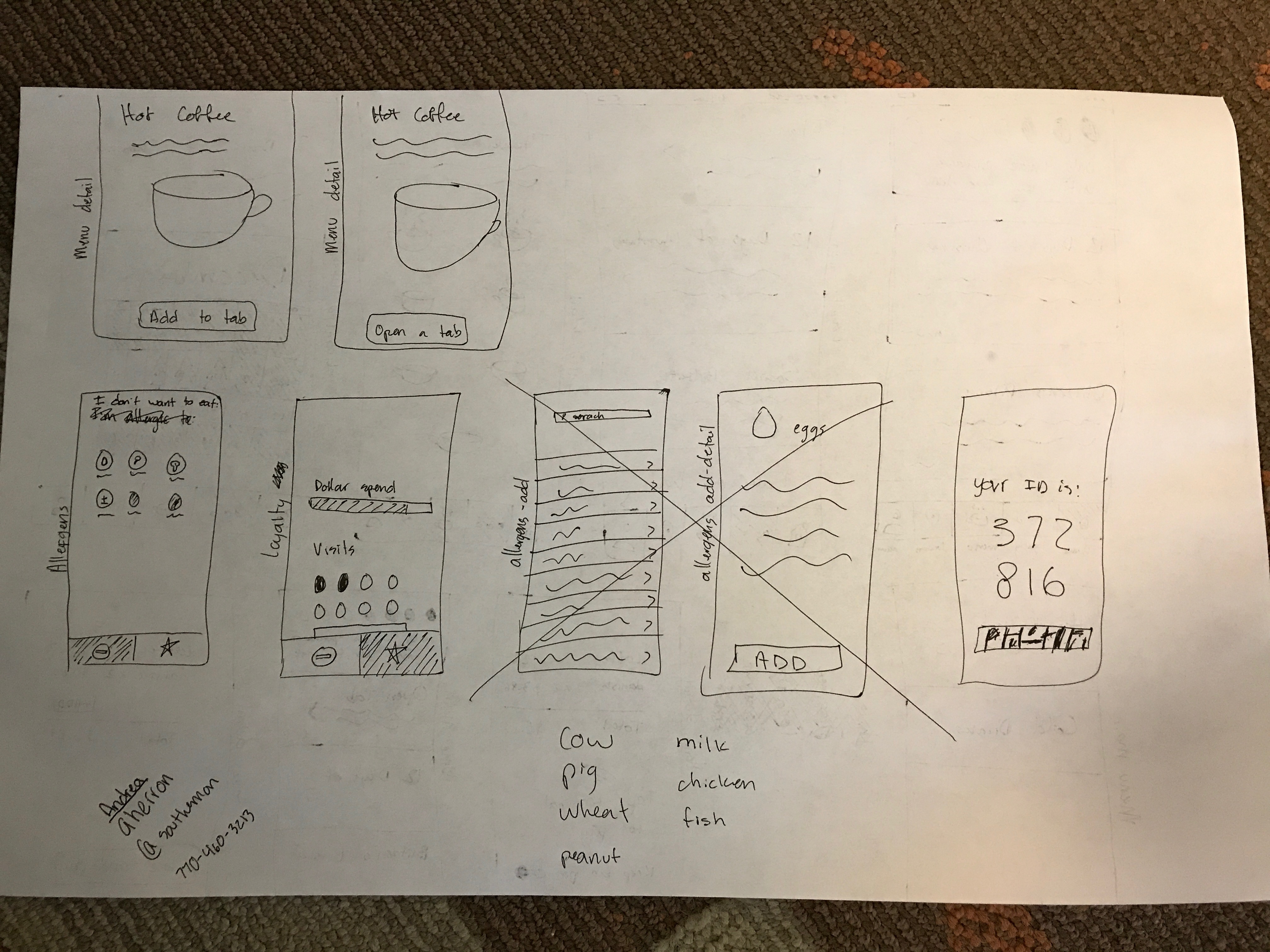
Sketches for Elavon project (Fanfare), and hackathon ideas

When I was with Elavon, I worked on the initial design phase of a developer portal project, I researched competitors, similar products, and services, gathered existing feedback we already had, identified personas, wrote user stories, identified red route user journeys, and organized the information architecture.

Information architecture for the Elavon developer portal project

Side Work

Worked with the Georgia Tech Glee Club to design an event and people management system for them to keep track of the gigs and attendance.

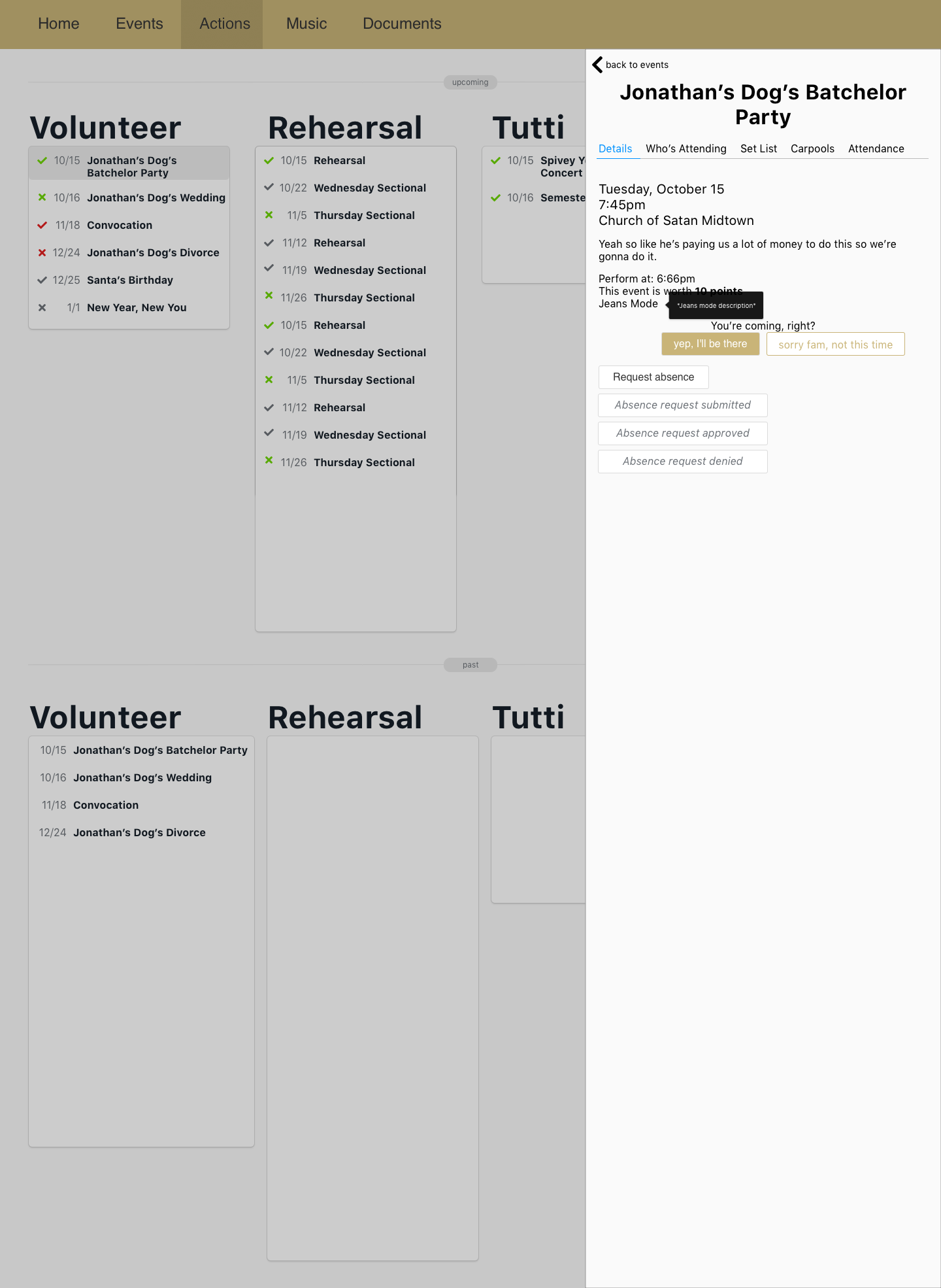
Homepage for the Glee Club management site

Can't put everything out on the internet for everyone to see, so happy to show more work via screenshare
Prototype

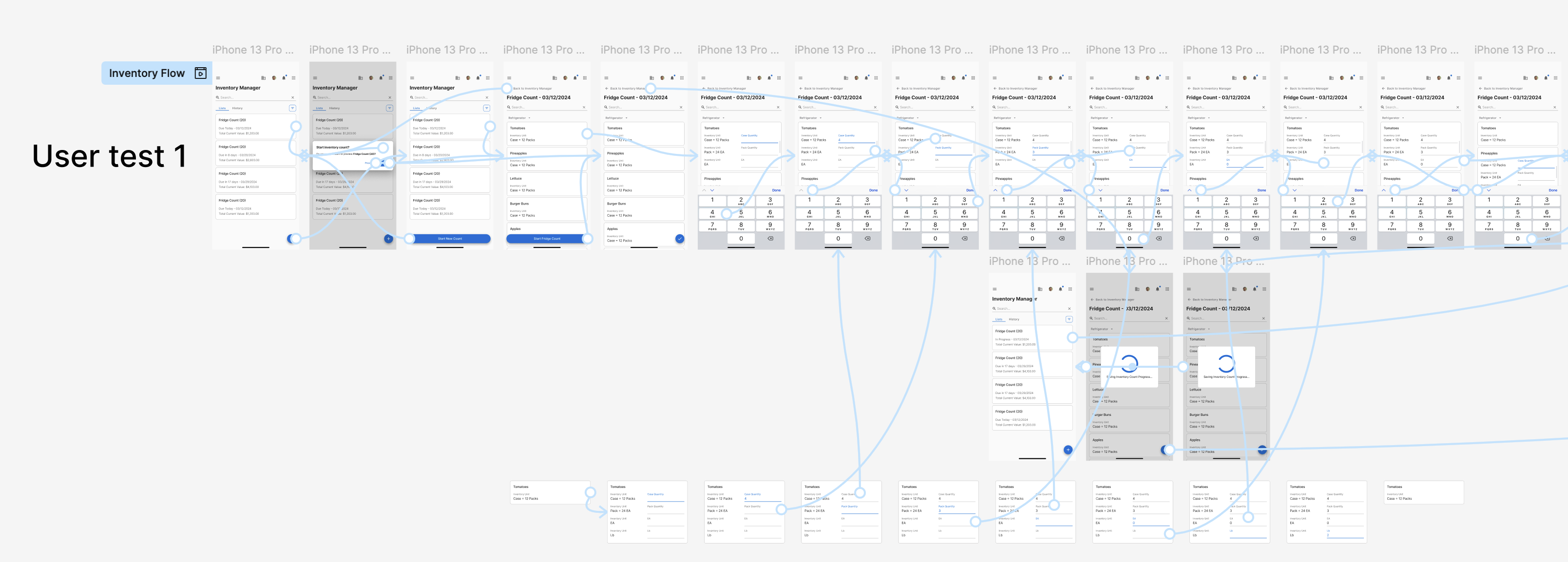
Figma has made prototyping so much easier! I used to have to export the Sketch screens to InVision and hook everything up, but now with Figma you can keep it all together and design and prototype at the same time.

Mobile Inventory

This is a prototype for a feature of the restaurant management web app where restaurant employees can count the inventory of items in different locations through the restaurant. It is mobile first since it's hard to carry a laptop around, and designed to be as quick as possible since the freezer is cold! I worked on this with my junior designer.

Part of the prototype for Mobile Inventory Counting

To use the live prototype, use the main link flow, and start a shift count in the walk-in. Pretend you have 4 cases of chicken breasts, skip the packs, you're out of pounds, and you have 15 eaches. You have 6 cases of tomatoes, skip the packs, and you have 3 eaches. Pineapples are completely out of stock. Then post your count for review.

No-Visual Navigation

How can we make sure that people with low or no vision can use our food ordering kiosk? Inspired by the way smartphone read out their screens and working with the Center for the Visually Impaired I devised a system to read out the contents of the screen and guide the user through the ordering flow without needing to see the screen. I was able to test this with random employees at the office by reading everything out myself (using my best robot voice) and laying out the script like a flow diagram so when they pressed the left or right buttons I knew what to read next. Definitely the most fun prototype I've done!

Evaluate

At NCR I was spoiled because we had a whole research team that was able to take our questions and uncertainties and run with them and figure out where the pain points were and what worked well. But sometimes research can just mean asking someone what they think of a design real quick and can take less than 5 minutes and be really informal. Plenty of problems can be identified that way without finding participants, running a screener, and waiting for results.

Why not use your Instagram followers to ask a research question?

Information Architecture

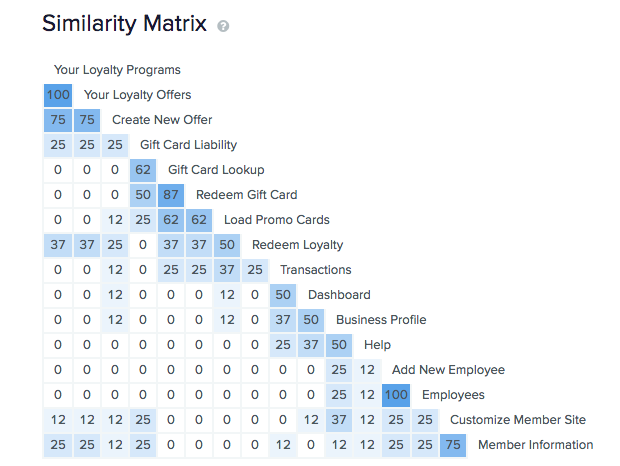
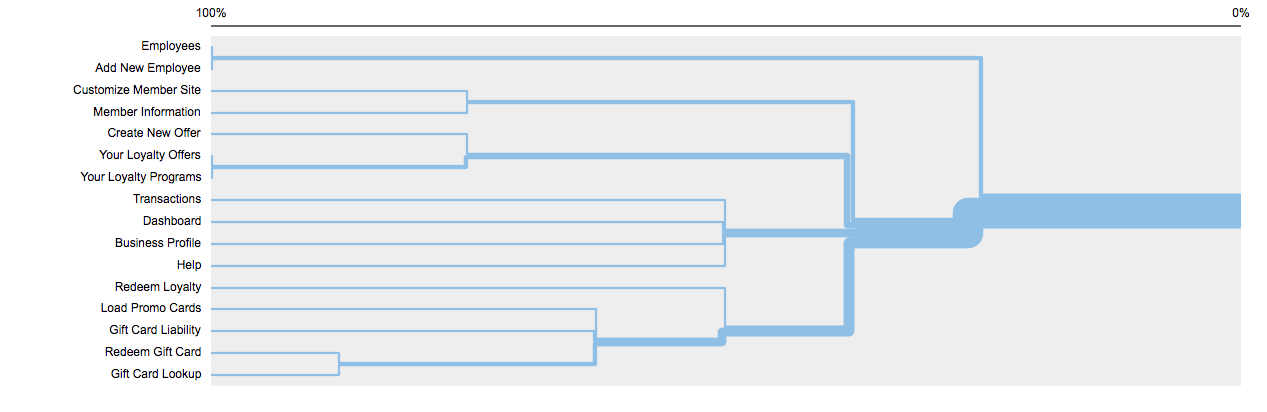
I'm a big believer in information architecture. I love organizing data and thinking about abstractions. A clear taxonomy is an important part of the user experience, which sometimes gets overlooked or bloated. I like to use stickies (digital or real) to map out the high-level structure of a product. I also use card sorts, similarity matrices, and dendrograms to help with this.

Post-its! Matrices! Dendograms! Oh my!

Loyalty Program Management

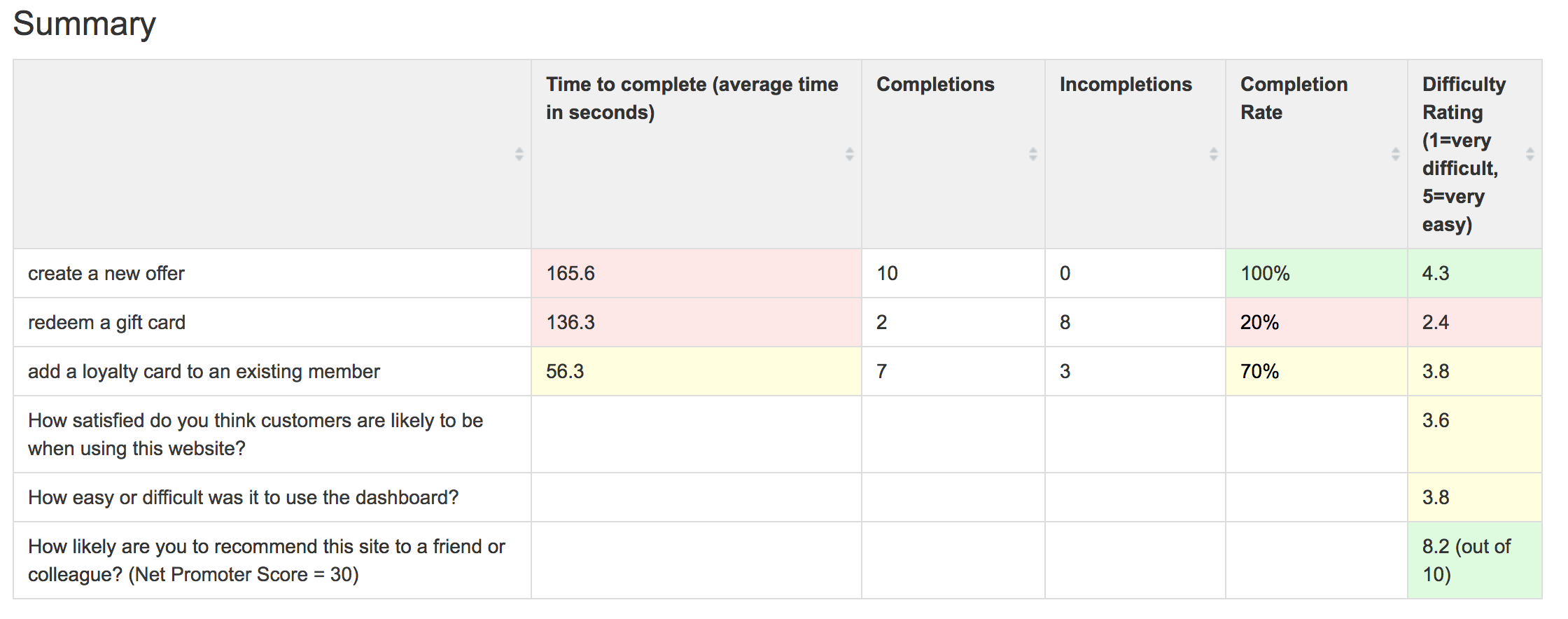
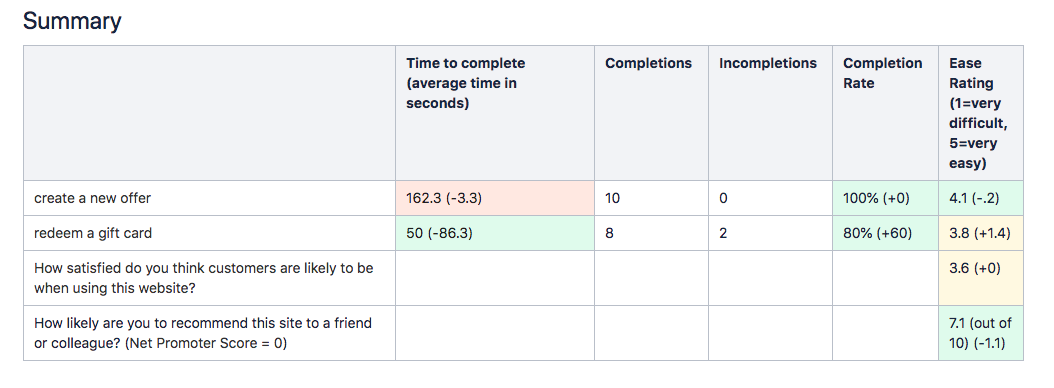
I tested the product before doing anything (oh no look at all that red!), and then after my redesign. You can see the time to complete the tasks is down, the completion rates are up, and the ease of one task went up while another went down (ops, Something to work on!)

Decided on some metrics and tested them before and after

Masters Project

My masters project collects data automatically about usage and performance to measure its efficacy. This is a custom-designed and -implemented solution specifically and only tailored to this project. Data is automatically collected and analyzed to show total errors (hopefully decreasing over time) and distance from the target (also hopefully decreasing over time). This project involved submitting a formal research proposal and getting approval from the IRB. You can read the incredibly interesting and not at all boring report here (tl;dr it worked a little bit).